

Kooks Welcome
a laypersons camera guide from an expert on summer

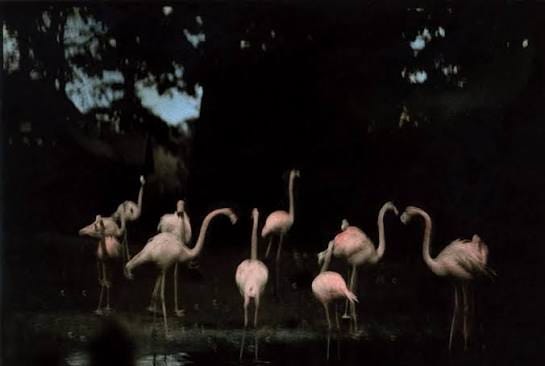
Earlier in July, I was away. I have questions about how “away” anyone can get these days, days where we are all exploring the world with historic vigor and liable to run into friends and family in far flung places. I live in a highly-trafficked neighborhood, and oftentimes when I go outside to get a breath of fresh air or run an errand or buy an ice cream sundae, it is with the understanding that it will play out much like an episode of This Is Your Life, where characters from 25 years ago come around the corner after you’ve just ran into your new friend who you’ve known only via the internet for years, and your current client may walk by on the other side of the street at any moment.
I am cursed in that I truly do love people, and love bumping into folks and have even written about that before. But recently I was instructed by an Apple Genius to turn off my “background refresh” on my phone in order to save the battery from running out, and when they explained how to do that and why it’s helpful, I couldn’t help but recognize the parallels in my real life, as well. Every day at home, my brain’s background refresh is turned on, constantly indexing and recalling roughly 42 years of open tabs at the drop of a hat, and it really runs my battery down, no matter how enjoyable.
My battery recharged while I was away, which also comes from being in the sea, and also only understanding a cool 40% of what anyone around you is saying at any given time. But something else felt new.
I feel so burned out on personal communication right now. I find myself posting less, talking less, writing less of the richness of my private life, but also simultaneously awash in the images thoughts and feelings of others. And, as much as I love being able to write on Substack, so much of those thoughts and images are attached to monetized advertisements, so it’s hard to tell even anymore what someone genuinely wants to say and what they are conjuring in the name of getting paid. That’s said with no shade by the way - get paid ladies! - I’m just a little burnt out on consuming so much messaging that is ultimately indirectly tell me what I need to buy.
So on this trip I didn’t feel obligated or moved to post anything. For the last five or six years when I’ve come back from Europe in July I round up my photos into posts and write a little emo blurb about where I am as a human in my life at that moment, and I kept that tradition up, but the rest I did not fee moved to share. The photos I took were for myself, for the record that I hold so dear. And my friends, the record is vibrant and long and well-documented, but it can remain mine and be no less valid for it.
I met my friend Erin Pollard through our mutual friend Jessie Randall one summer when I was visiting my sister Tamu McPherson in East Hampton. We bumped into each other at Carissa’s and Erin stood up and immediately from her presence I could sense that she is my people. She is radiant and goofy, smiles easily and gives generously, loves her kid and her community and is in possession of a confident humility that is rare in 2026.
She is also one of my favorite casual photographers, a true documentarian who makes every image feel easygoing and spontaneous. She isn’t often selling something (except kits and classes at Underwater Weaving and Baskets for Breakfast), but her images come from an epic camera collection and a casual approach to documentation. Her background in fashion and editorial plus her child-of-the-80s references make her visual language absolutely delightful.
I thought at this point in the summer, when we are all hopefully waist deep in bodies of water in our free time but its possible to adopt the glass-half-empty view of the time before school starts, I’d ask her to share some of her camera tips. I truly love Erin - and if you don’t already know her I know it’s just a matter of time before you do, too.
Erin’s full time job is teaching people how to weave baskets, and her next membership basket ships on August 15th. You can sign up here to become a member, find out more about the club here, and follow the studio on Instagram here. Happy weaving. xx
AT: Erin you are my dream photodocumentarian, especially during summer when you are up and down the East Coast and documenting your family and your business and your garden. What cameras do you always have on you?
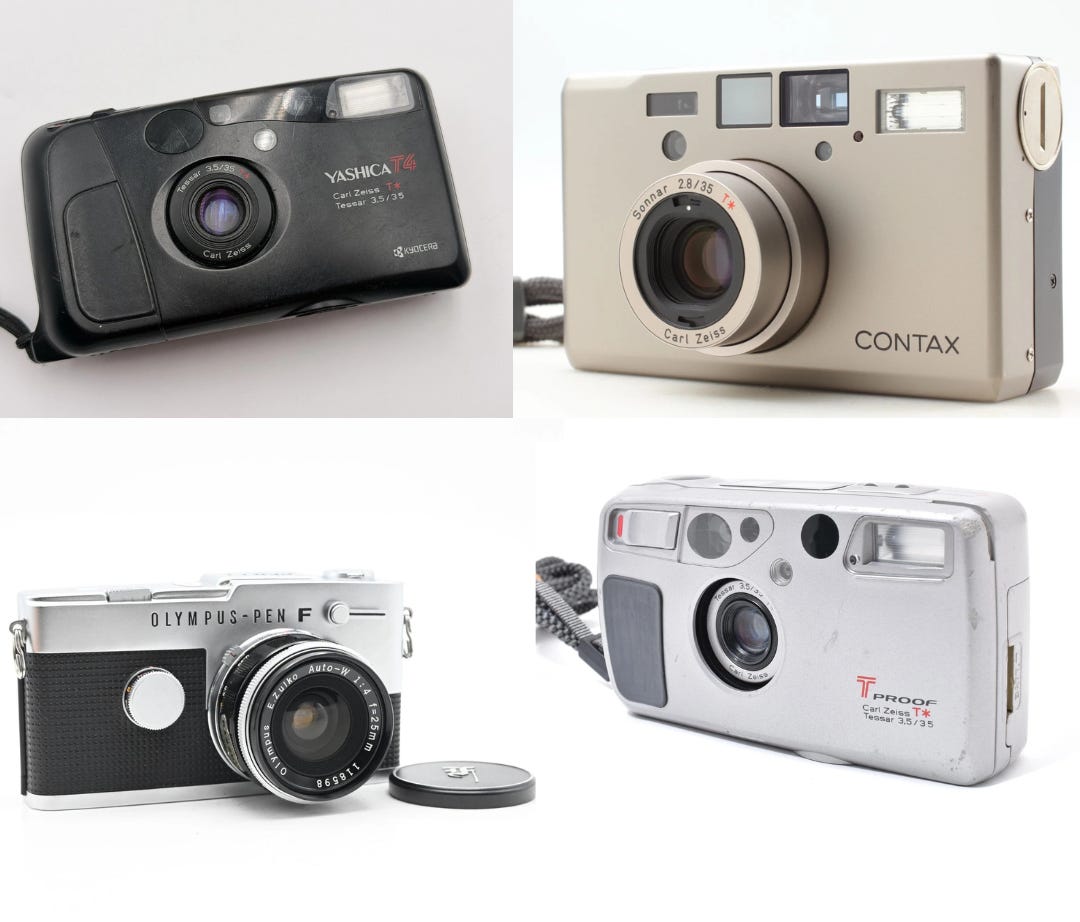
EP: Thank you for saying that. It’s like you said, there are only so many summers in a lifetime! It’s just best practice to capture every single thing that you see :). I collect memories just as I would shells at the beach. I buy a lot of silly burner film cameras and vintage cameras that may or may not work. Sometimes they do, but I always develop the physical pictures and have them scanned digitally. I use a lot of disposable cameras, which is totally off-brand for me as a granola-eating basket weaver, but yeah, and I have a panoramic sprocket hole camera and a double exposure camera as well– not sure why, I guess because I’m still learning and it’s part of the process. I just bought a 1975 Nikkormat, a tank of a camera that I’m attempting to learn to use. The family shares a Canon Digital, but because I’m bad at using it, my photos come out looking like film. I recently dropped it in a creative frenzy and need a new lens.
I sort of like the trial-and-error, messy, disorganized discovery non-process-process of it all.
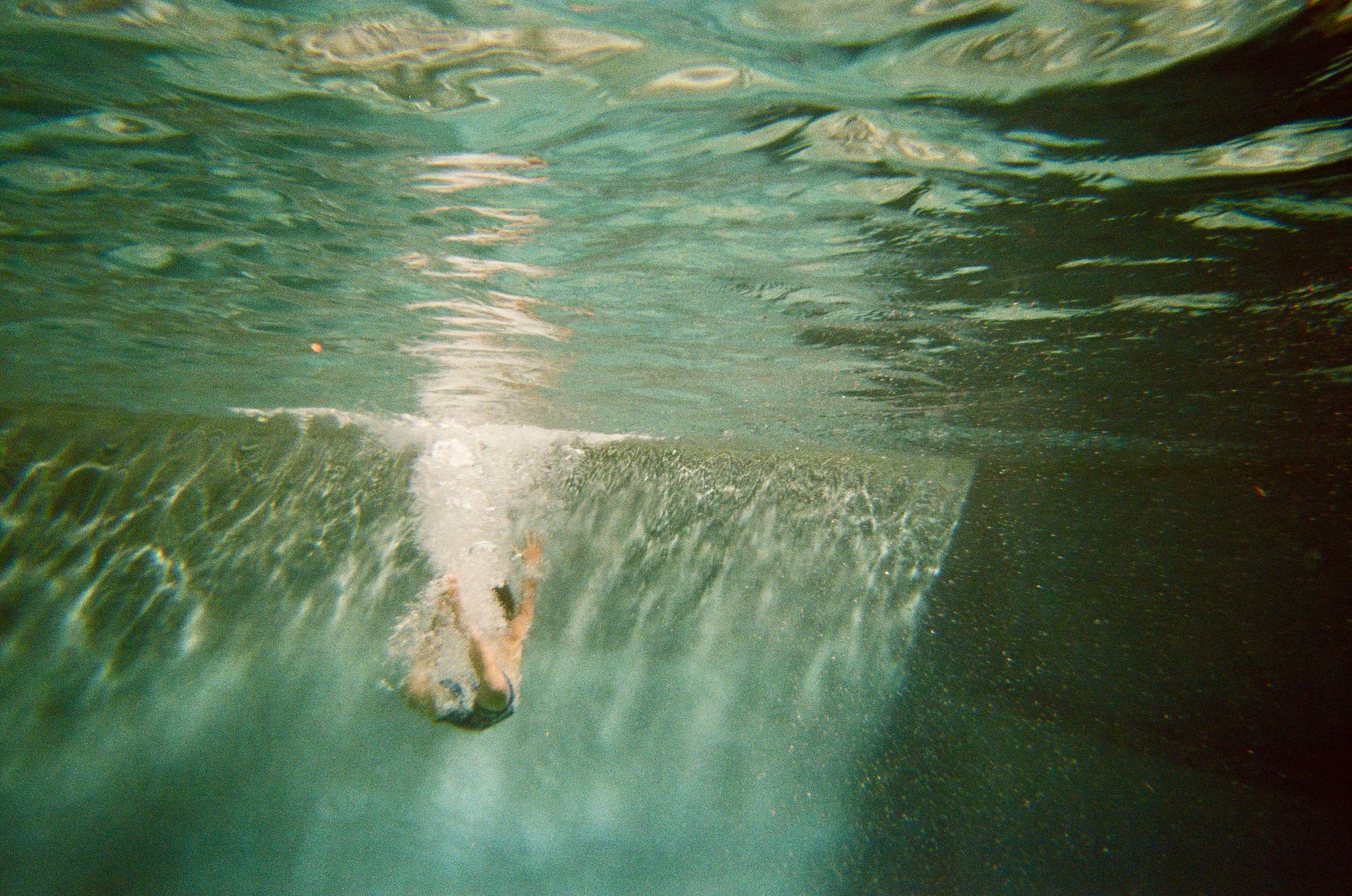
AT: You also let August run amok (complimentary) with film, which I always admire but I’m also like…. haaha that looks expensive! Does he have his own camera now and perhaps more importantly, what is he looking for when he is making an ideal photo?
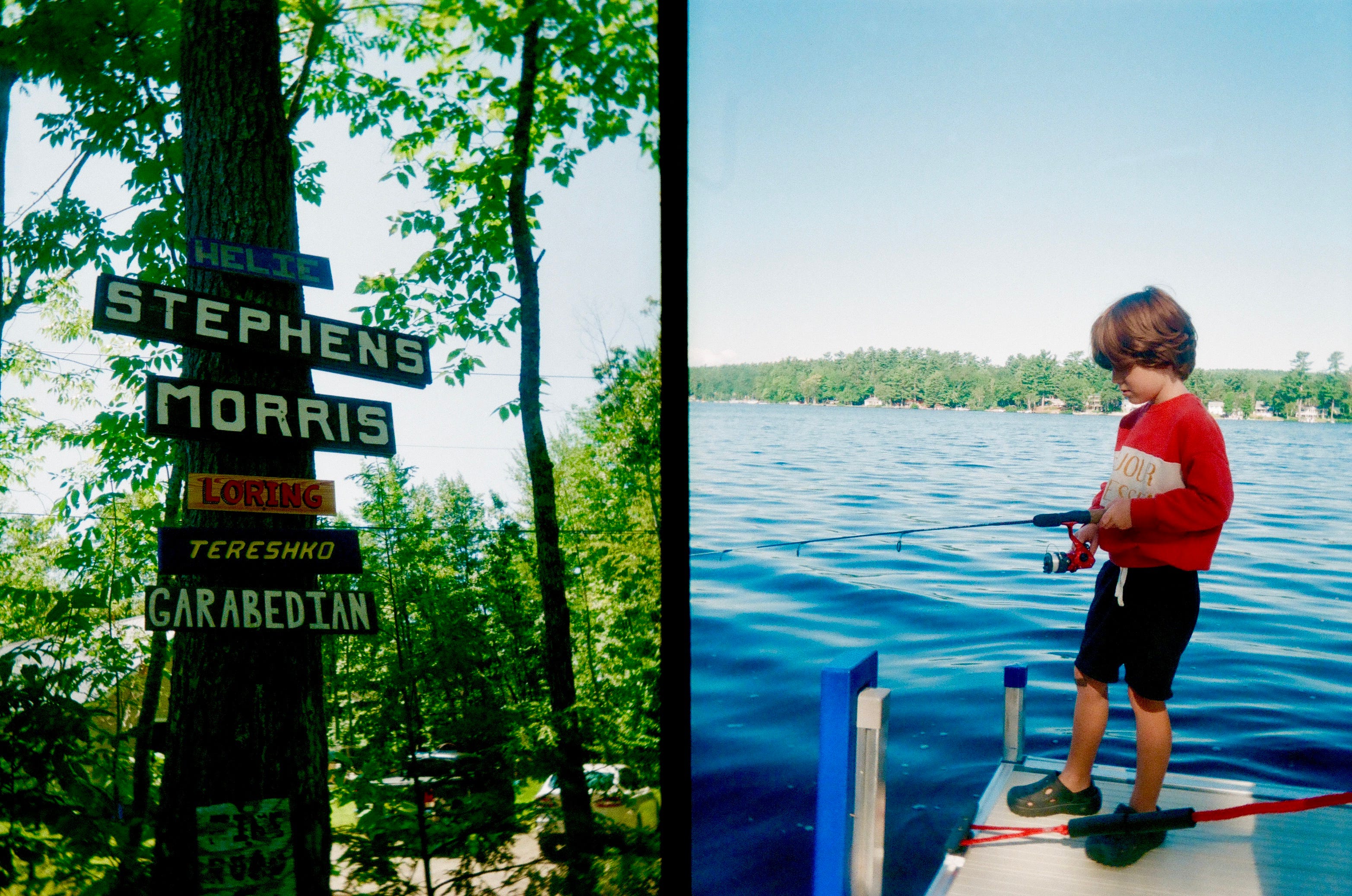
EP: He’s an incredible photographer! But more because kids are, without trying, incredibly uninhibited artists. He has broken all the cameras I’ve given him, so yeah, it’s been an expensive practice. But worth it– I love the way there is zero pretense about creative outcome. You might develop a whole roll of nothingness, like 17 shots of a Lego castle. But I think it’s been really interesting to see the way he photographs people– the way he brings out the human spirit.
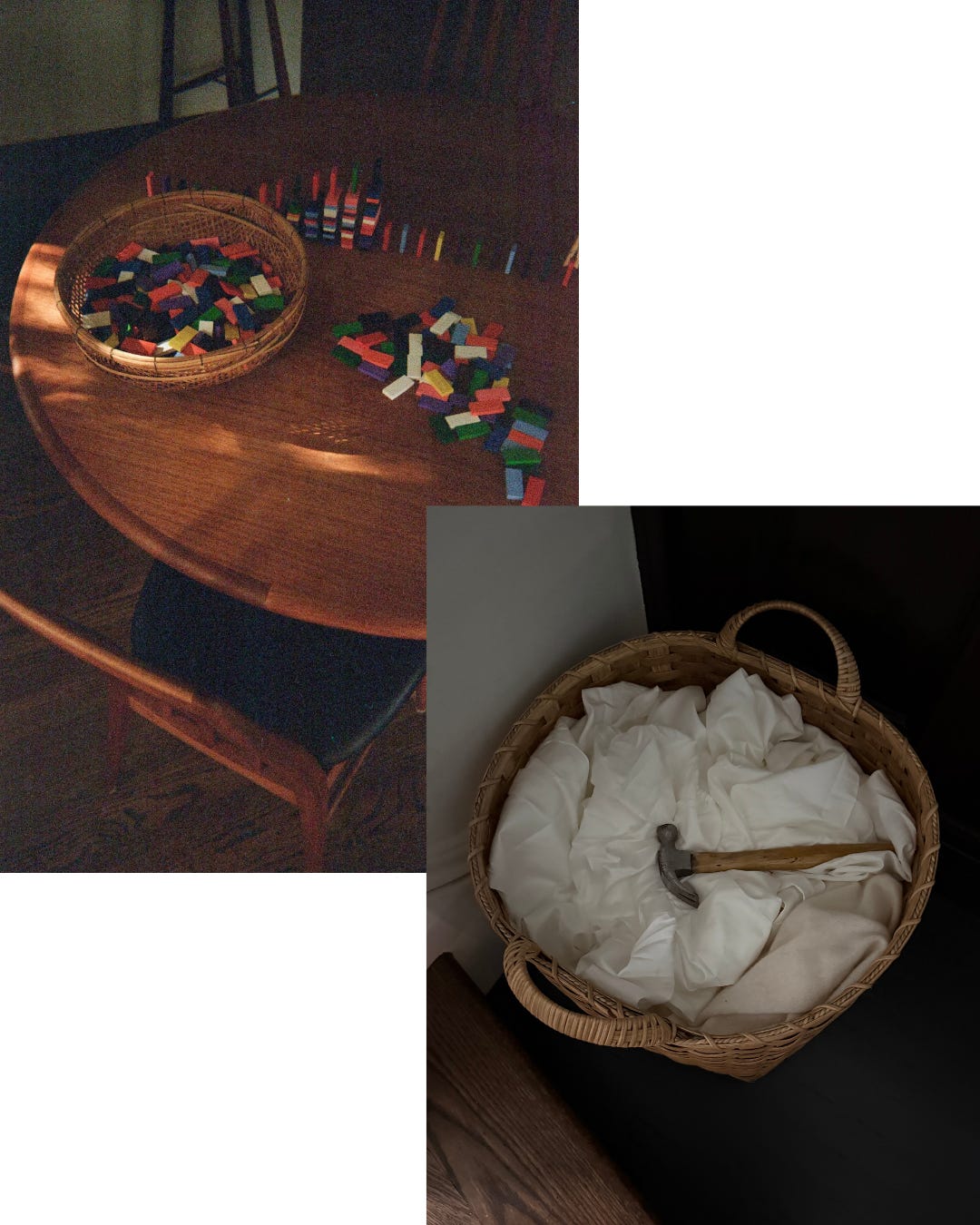
AT: Crucial question: where do you get your film developed? I know people love Color House for the centrality of downtown Manhattan, but do you have some secret other place that no one knows about (that you’re willing to un-gatekeep)?
EP: I use Accurate in Brooklyn, more for convenience. But it’s a family business, and I like them.
AT: Your dream camera? For the record?
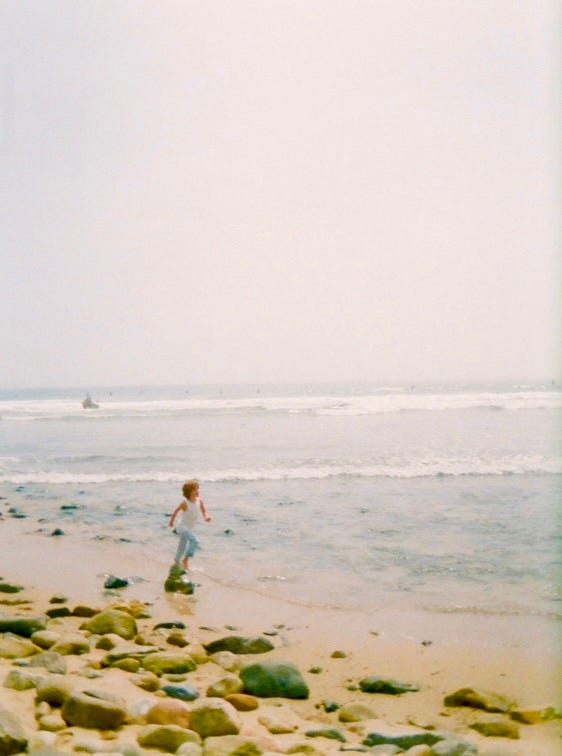
EP: I focus more on composition, art direction, and light than the gear itself. What’s interesting to me is capturing a scene exactly as I might hold it in my memory. We don’t remember things perfectly framed. The inhale and exhale of a fleeting moment might look like a blur, or a shadow on the ground. Often, I think it’s that lack of technical perfection that makes an image feel human. I love the physical process of taking a photo and not even knowing if it will develop. It’s a less precious approach.
AT: Talk more about that.
EP: I’m drawn to the intimacy of life and the quiet relationship between elements. I like to zoom in and frame things slightly off-center—the way the mind’s eye actually works. That’s why film is so essential to this process. A digital phone camera technically captures more individual colors than you can physically see, but film captures the quality of those colors. It mimics how our biology processes light: as a seamless, unbroken wave, rather than a digitized, engineered grid. That physical reaction is exactly why we feel so deeply connected to memories captured on film.
AT: Favorite places to look for cameras when you’re investing in a film or digital camera and not just burning through disposables? I have answers for this question too!
EP: Antique shops and vintage stores! I think old cameras are special artifacts even if they don’t work, so I collect them as objects. But now I need to know where you’re getting yours!
AT: I have like a penny pinching psychosis, especially when it involves indulging on things that are “for me”, and one time some years ago a dear friend told me that B&H Photo sells the floor models of their cameras at a discount, but they normally don’t have much wear and tear. My favorite point and shoot digital is a FujiFilm that I got at severe markdown at B&H! It looks like film.
I also got the Olympus Pen half frame that I once saw you using by searching on eBay and eventually finding it in Japan. There is a guy in New Jersey who has a camera manual library online called Butkus. Any time I’ve bought an old camera from a reseller I go and download the manual from there and try to really learn how to use it. I always give the Butkus guy some money via PayPal because his work is a public service!
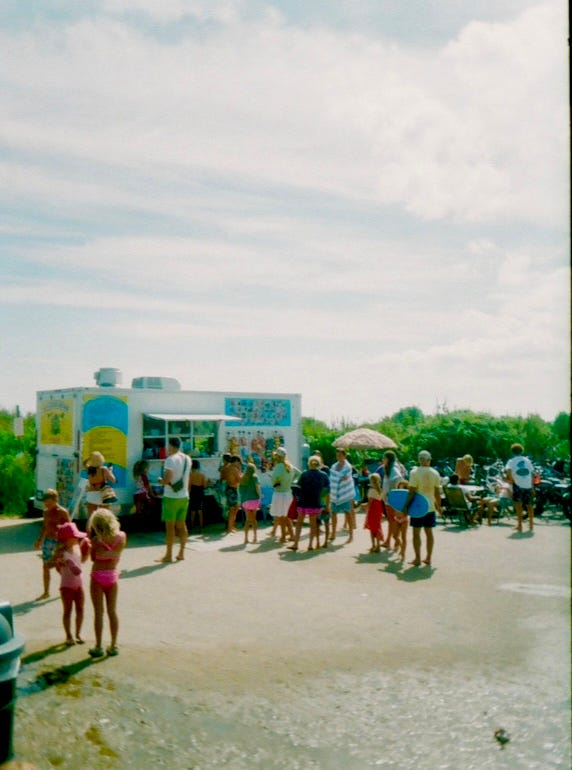
The other day a wind moved in to the city that can only be described as a Septemberly wind, and a wave of panic shot through my bones that I have not done enough to make this summer count. I fully realize, as someone who has spent a lot of time contemplating grief, that photography is sometimes a way of staving off the inevitability of the end.
When I was leaving Marseille my daughter insisted on going down to the Mediterranean to fill an empty Evian bottle with a pint of sea water, which she then carried with her through the rest of France and lovingly wrapped in a plastic bag before she checked it in her luggage to come back to New York, where it arrived unbothered. It’s sitting in her bedroom now, the kidnapping victim of a child who was not ready to let go. When she arrived back from the beach with her bottle of seawater I snapped photos gleefully, delighting in the naïveté of a child who thinks she can keep a memory forever, absentmindedly recording the moment so that I would never forget it.
yours, captured forever,
x Anja
p.s. I saved all of these recommendations for you on Rec League.
Have been feeling a return to photography in my artistic practice, really enjoyed this. Thank you for sharing✨
I had a functional (kid’s) camera when I was 5/6, which I’d been given just a little bit before we moved from London. My parents still have photos from that time, and we usually get confused about whether they were taken by me or them. It wasn’t a hobby my parents could bankroll longterm and certainly not after we moved to Bangladesh, but it’s really fun to see the world through the lens of a child and be amazed at how mature that outlook can be (although a bunch of those photos were artsy close-ups of my yellow teddy, Buttercup)